The week before Christmas we boarded a plane and headed to Cuba. The island nation has always intrigued me for the simple fact that they seem to be stuck in the 1950's! I know that's not exactly the case, but when the United States placed an embargo against Cuba in 1960 it halted all commercial, economic, and financial trade between the two countries leaving much of Cuba's architecture and transportation unchanged from that time period. In 2015 the Obama administration loosened restrictions around U.S. citizen travel to Cuba. Although the embargo hasn't officially been lifted it feels like it will only be a matter of time before it is. I wanted to see Cuba before the country is fully open to the U.S, which will undoubtedly change Cuba.
Cuba, officially known as the Republic of Cuba, is an island located in the Caribbean Sea. Although the country is geographically considered part of North America (as it is only approximately 145km from the Florida Keys), culturally it is considered part of Latin America. They have a population of about 11.2 million people. The capital, and largest city, is Havana and the official language is Spanish. We spent the majority of our time in the resort area of Varadero; located on the Hicacos Peninsula in the province of Matanzas.
Cuba as located in the Caribbean
We spent the first few days of our vacation hanging around the resort, the Iberostar Laguna Azul, and soaking up the sun on the beach. Although there wasn't a reef near our hotel, the snorkeling was surprisingly good just offshore.
The Iberostar Laguna Azul
A panoramic shot of the resort
There were lots of these Cushion Sea Stars just offshore from the resort
This large anchor was attached to a massive chain. The whole thing was acting like an artificial reef as there were dozens of fish all around it!
These Bluestriped Grunts were just one species hanging around near the anchor and chain
Jeff holding a True Tulip Snail
Sand Diver
Yellow Stingray
One evening we hopped in a taxi and headed into Varadero. Being a resort town, one of the biggest in the Caribbean to be exact, means there are very few locals. The town is filled with shops, restaurants, and bars and is very safe to visit. We heard a rumour (please keep in mind this is unconfirmed) that to keep tourists safe the entire area of Varadero is actually off limits to Cuban locals unless they have a reason (ie: their job) for being there. We spent the evening bar hopping and exploring the area. Personally I would like to be in an area where locals are allowed to go so I can get a better understanding of the local culture.
Enjoying a pre-drink at the resort before heading into Varadero
Beers on the patio of El Rancho Restaurant
These generous shots of rum were literally cheaper than water!
Jeff and Sarah on a bridge in Josone Park
Setting Sun
Che Guevara's likeness can be seen across the country as a revolutionary symbol
We took one of the convertible classic cars back to the resort
After a couple of days on the resort we travelled west to the capital city of Havana. Havana is a 500-year-old city and is approximately 145km from Varadero. While Varadero is strictly a tourist destination, Havana is a bustling urban centre filled with history.
We stopped at the Bacunayagua Viewpoint, which was essentially a tourist trap!
There were dozens of these Turkey Vultures flying around
Christine and I taking in the view
The view was pretty good. You could see mountains in one direction and the ocean in the other.
Our first stop was the Nacional Hotel, a luxurious hotel located on the Malecón on top of Taganana Hill only a few metres from the ocean. The site offers spectacular views of Havana's Harbour, the seawall, and the rest of the city. The hotel opened in late 1930 and was a popular attraction for high-profile guests such as artists, actors, athletes, and writers. Later the hotel became synonymous with American mobsters like Lucky Luciano and Meyer Lansky and was the site of the infamous mob summit in 1946, which was dramatized in the film The Godfather Part II.
The Nacional Hotel as viewed from the front
The backside view of the hotel
There were Peacocks roaming around the hotel grounds
Looking out into the courtyard
Located on the grounds of the hotel are remnants of the Cold War. A series of underground tunnels and bunkers, called Cueva Taganana, were created prior to the Cuban Missile Crisis in 1962, when the world was believed to be on the brink of nuclear war.
Entrance to Cueva Taganana
A set of old military binoculars
Heading deeper underground
Jerry standing in one of the trenches
After leaving the hotel we headed for Revolution Square, the site of many political rallies and where Fidel Castro and other important figureheads have addressed Cuban citizens. The north side of the plaza features the José Martí Memorial; a memorial to the Cuban hero who, through his writing and political activism, became a symbol of Cuban independence against Spain.
Jose Marti Memorial on the north side of Revolution Square
Many of the cars in Cuba are pre-1960 classics!
The southern side of the plaza, opposite the memorial, are the offices of the Ministry of the Interior and the Ministry of Communications. Each building is adorned with the steel facade of deceased Cuban heroes of the Cuban Revolution. The Ministry of the Interior features Che Guevara with the quotation, "Hasta la Victoria Siempre" (Until the Everlasting Victory, Always). While the Ministry of Communications building features Camilo Cienfuegos with the quote, "Vas bien, Fidel" (You're doing fine, Fidel).
Ministry of Communications building with Camilo Cienfuegos' memorial
Ministry of the Interior building with Che Guevara's memorial
Our final stop was in Old Havana. Here we were allowed to explore the core of the original city of Havana. We quickly found a place to eat and then explored the busy streets that were filled with shops, pubs, restaurants, cafés, vendors, and more.
El Capitolio - The National Capitol Building
The National Capitol Building was the seat of government until after the Cuban Revolution in 1959 and is now home of the Cuban Academy of Sciences. The building was completed in 1929.
The Great Theatre of Havana's first presentation was way back in 1837
More classic cars
The National Museum of Fine Arts of Havana
Central Park statue of Jose Marti
Busy street in Old Havana
Ernest Hemmingway, the famed writer, spent seven years in Havana in the 1930's. One of his favourite pubs was La Floridita. Today the bar is popular with tourists (including us) and has a famous daquiry that they claim is the best in the world! Hemmingway's bar stool is protected by a velvet rope and there's a statue of the writer standing nearby.
Statue of Ernest Hemmingway in La Floridita
A colourful street in Old Havana
Cathedral Square
The Cathedral of the Virgin Mary of the Immaculate Conception, also known as the Cathedral of Old Havana, is one of eleven Roman Catholic churches on the island. This one was completed in 1777.
Parade Square
Old Havana
Rooftop view from the Hotel Ambos Mundos
Old Havana
Looking down on the city
Christine and I
The day after exploring Havana four of us jumped in a van and headed south to the Bay of Pigs for some snorkeling and SCUBA diving. The bay is located on the south coast of Cuba along the Gulf of Cazones. The drive was approximately two hours from our hotel and allowed us to see even more of Cuba's countryside. The area is famous for the failed Bay of Pigs Invasion that occurred on April 17, 1961. Brigade 2506, a CIA-sponsored paramilitary group aimed at overthrowing Castro's increasingly communist government, was quickly defeated by the Cuban Revolutionary Armed Forces within three days of landing on the island. Today there are still machine-gun bunkers and other remnants from the short-lived battle on display throughout the area.
Bay of Pigs
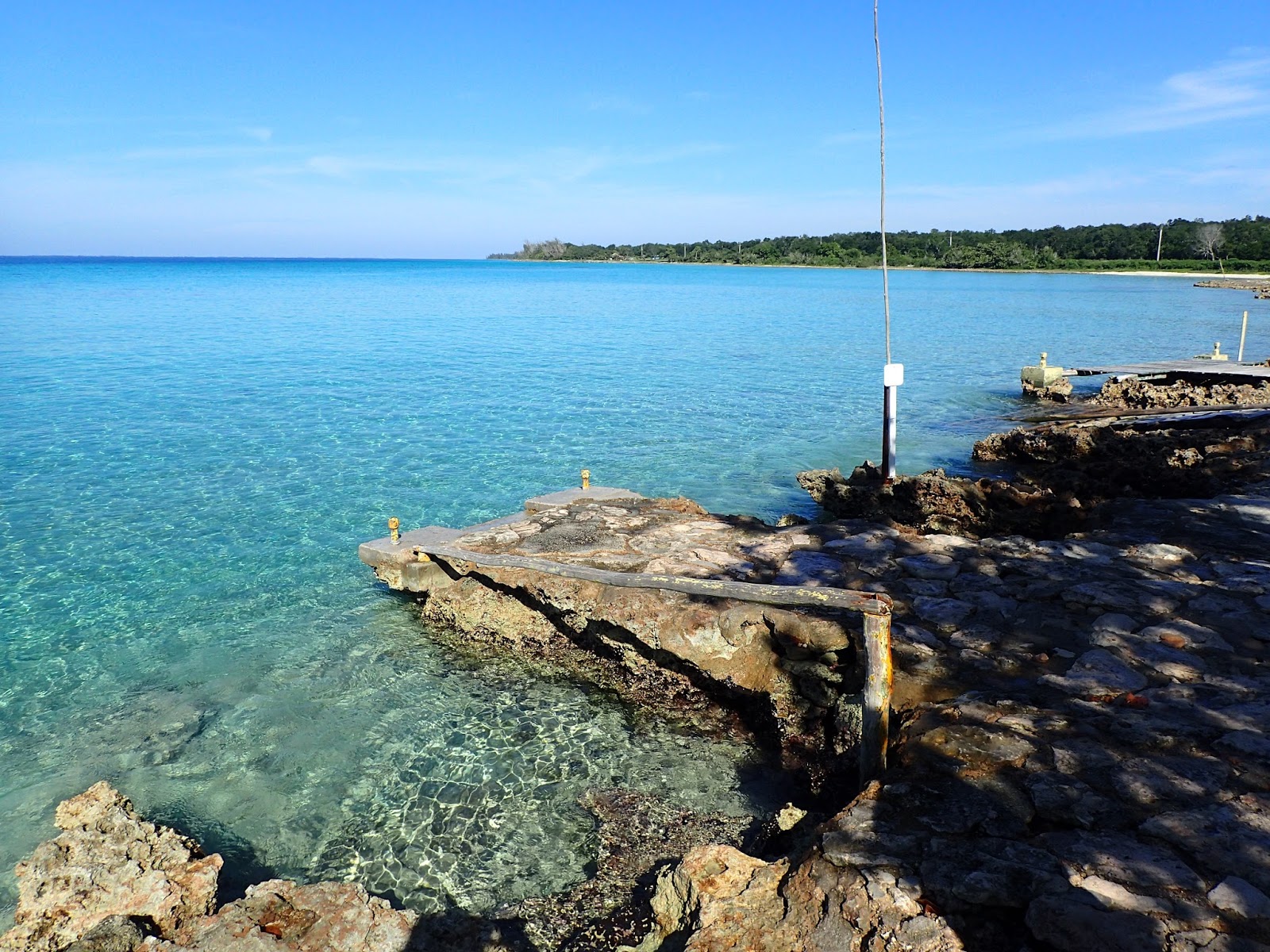
Panoramic shot of the diving and snorkeling area
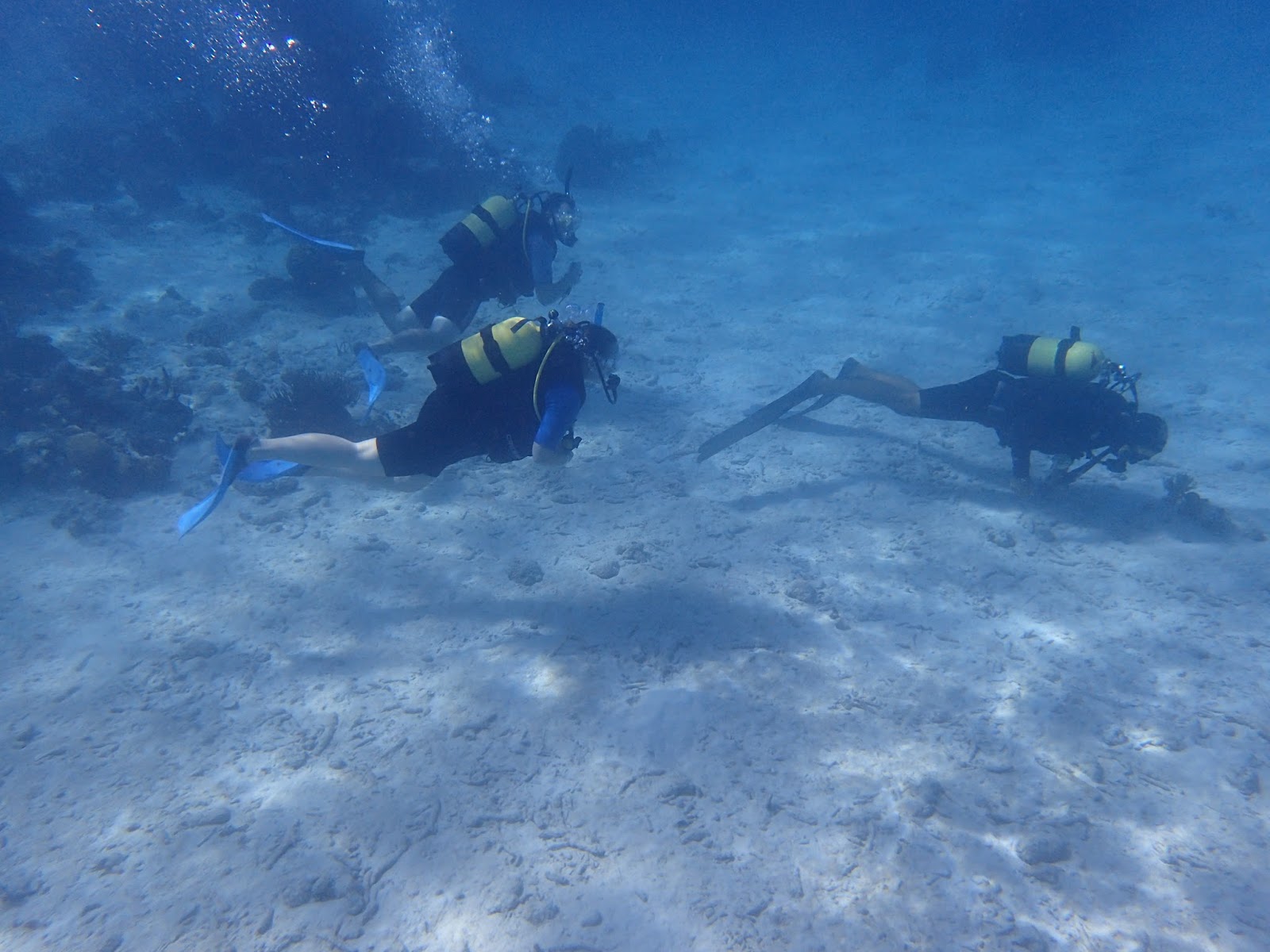
Gearing up for our dive
Christine and I with dive master Hector
Jerry and Rosemary snorkeling on the surface
Christine
Christine with the sunken landing craft below her
A short video compilation of our dive in the Bay of Pigs
The diving and snorkeling was in an area that was protected from fishing, which meant the reef was in great shape and the fish were quite large. There was a small boat that was sunk during the Bay of Pigs Invasion on the bottom and a set of wheels that had been attached to a machine-gun nearby.
After our dive there was still plenty of time for some snorkeling. This is a Needlefish.
Wheels that were previously attached to a machine gun
Porcupine Fish
Chubs
Queen Conch
Before heading back to the resort we stopped for lunch at Ismary Restaurant; a family-owned operation
We were treated to an incredible traditional Cuban meal, complete with lobster, crab, chicken, crocodile, rice, beans, salad, and freshly squeezed mango juice!
Christmas time in Cuba
Playing with Sarah's new selfie-stick!
This is Allain and he was our bartender/server for most of the week. He was awesome and seemed to enjoy shooters even more than any of us!!
Jeff and Sarah
Allain and I enjoying another shot!
Unfortunately the next couple of days were plagued with wind, rain, and cool weather. The red flag was flying high, indicating the beach was closed, so we had to find something else to do. We hung around the resort, hoping the weather would break and the sun would come back out, which it never did. We spent most of the day reading and relaxing in the hot tub...with a drink or two!
Miserable day on the beach
Japanese a la carte restaurant
Evening drinks in the lobby
The next day, when the weather was the exact same, Christine and I walked to the nearby Varahicacos Natural Park to do some exploring. We first stopped at Ambrosio Cave, an important archaeological site (one of 15 discovered) on the Hicacos Peninsula. Ambrosio is home to several thousand bats, which can be seen and heard throughout the cave...definitely not Christine's favourite! There are also traces of pre-Columbian inhabitants that give clues to the island's indigenous population. The cave contains 47 cave paintings, or pictographs, that were painted in both red and black. The cave is approximately 250m long and contains five interconnected galleries that are all easily accessible, provided you have a flashlight! During colonialism the cave was also used as a refuge for runaway slaves.
Ambrosio Cave
Entrance to the cave
Fruit Bat
Of the five species of bat that can be found in the cave, the Fruit Bat is one that doesn't mind the spotlight!
Just one of the 47 pictographs that can be seen throughout the cave
Pictographs
It is unknown what the different pictographs mean
Inside the one of the cave's five main chambers
Christine happy to see some daylight!
Cave Selfie
A short video showing a few of the cave's resident bats!
Next we made our way over to Los Musulmanes' path, an interpretive trail that offered a wide diversity of flora and fauna that are native to the area. The short (approximately 2km roundtrip) out-and-back trail wound it's way through the forest, highlighting many of the natural features along the way.
Main entrance to Varahicacos Ecological Area...The Other Varadero!
A small bird perched on the side mirror of a scooter
Termite Colony
A close-up example of the rocky terrain that we were hiking on
Just one of the many unique trees in the forest
There was another cave along this trail. It was much smaller than Ambrosio, but there were still bats inside!
Vines and roots growing into the cave from above
This aboriginal burial site was found in 1985 and is over 2,000 years old. The skeleton was found buried with ornaments and utensils, but was the only body found in this particular cave.
This pool smelled of sulfur
A wooden boardwalk leading to the lagoon's viewpoint
Celebrating Christine's 30th birthday at one of the a la carte restaurants
Enjoying a drink with our new friends from Switzerland
These curly-tailed lizards were all over the resort
A couple of lizards sunning themselves on a rock
The morning of our last day in Cuba. The sun was shining and we were finally able to take one last swim in the ocean.
Although we had a great vacation, I didn't seem to enjoy Cuba as much as other countries I have been to before. The first question most people ask is, "how was the food?" I'm happy to say that the food wasn't nearly as bad as some people make it out to be, but it was pretty repetitive after awhile. I thoroughly enjoyed Havana and would have liked to have spent more time there as opposed to the resort community. I am really happy we went, but I don't know if I'm in a big hurry to go back. There are just so many other places in the world to see!
If you've been following my blog for awhile you'll know that I had a remote wildlife camera in the Ghost Valley area since January 2015. This past fall when I hiked in to check it I discovered that the tree had been cut down and the camera had been stolen. You can read all the details about it right here. I didn't want my camera project to end on such a sour note and luckily my birthday and Christmas were right around the corner. As a birthmas present I received a brand new Moultrie trail camera and all the accessories needed to install it in a new location. The day before we left for Cuba I headed out to the mountains to set it up. I opted for a completely different location than my last one. As much as I love the Ghost Valley things have gotten a bit too crazy out there lately! Hopefully this new location will produce as many quality images as the previous one did. If you'd like to see a collection of the best photos from my previous trail camera please visit my Facebook album titled, Wildlife Camera. The best photos from this camera will be posted there as well, once I start checking the camera on a regular basis.
Sunrise in the mountains
All set up and ready to roll!
Hopefully this time it's a little more secure!
On my way back to the car I took a different trail and stumbled across an old cabin that was used as the Lac des Arc Rock Climbing School. Unfortunately a Google search turned up very little in the way of the cabin's history, so I am unsure if it's still being used or not. Nevertheless, it's still pretty cool to find an old relic tucked away in the woods with no signage indicating its whereabouts.
Lac des Arc Rock Climbing School
The cabin looks like its been here a long time
An old door leaning against the back of the cabin
This old wood burning stove can be seen outside the cabin
It's difficult to see, but these red bricks are stamped with the word "Calgary" on them
The best hiking partner a guy could ask for!
I'm hoping to get back out there in early January to see what's been captured. Stay tuned for the latest results!
Although we got a bit of a later start this year (we didn't head out until the second week in December) our annual Christmas Tree hunt was another successful one. Previously we had always gone to the Ghost Area for our trees, but this year we wanted to stay a little closer to home so we headed to the Elbow River Area, which is still in the South Saskatchewan Region for provincial tree cutting permits. You can read all about last year's successful hunt right here.
It was a beautiful blue-sky morning as we drove west from Calgary along the Trans-Canada Highway. We were heading for Highway 40 in Kananaskis Country so we could work our way back towards Calgary along Highway 68 (Sibbald Lake Trail). This stretch of secondary highway is roughly the northern border of the Elbow River tree-cutting area, so we were hoping to find the perfect trees along this section of gravel road. It didn't take long before we found a decent stand of evergreens, so we parked along the road, geared up, and began walking.
Rome loves this day just as much as we do!
There were five families participating in this year's hunt and all of us were able to find great trees relatively close together. I even got to try out my new chainsaw, which made quick work of the tree trunk!
Pretty excited to try my new toy!
Selfie in front of this year's tree
Cutting through that tree trunk like butter!
Success! Now it's time to carry it back to the truck.
After the trees were all loaded we made our way to Sibbald Lake Recreation Area where we had a bon fire in the day-use area. Almost as soon as we brought out the food the Whiskey Jacks started showing up. There were four or five of them flying around from tree to tree, hoping to steal something when one of us had our back turned.
Gray Jay aka Whiskey Jack
Casually watching our table for unguarded food!
Whiskey Jack
We couldn't have asked for better weather again this year. I'm really happy that this is something we plan weeks in advance to ensure that everyone is able to attend (thanks Ashley for your role in this!!). After our bellies were full we piled into the vehicles and headed back to the city to drop off the trees. Once again Ryan and Ashley played host in the evening for dinner, drinks, and way too many baked goodies. Thanks again to everyone that took part in a wonderful day outside. I'm already looking forward to next year!
Group photo at Sibbald Lake
The Christmas Tree in our living room
If you're looking for more details on how to cut down your own Christmas Tree next winter, please refer to this story I wrote for the Calgary Guardian titled, The Search For The Perfect Tree.
I've been a volunteer writer for Calgary Is Awesome (C.I.A.) for over a year now. I started in September of 2014 and was looking forward to what my second year would bring. Unfortunately there was a major dispute with the owners of the C.I.A brand. Apparently the sole owner of C.I.A (who is based in Vancouver and also owns Vancouver Is Awesome and Toronto Is Awesome) was making a profit off of his army of volunteer writers. From the sounds of things he had secured some substantial ad funding to advertise on his websites, which were seeing over 20,000 visits per month. He was also publishing a book with the work of the Vancouver crew and also making a profit off of that.
Sarah (the Managing Editor here in Calgary) approached the owner to inquire about our own advertising on the C.I.A website, as she'd been approached by numerous companies interested in advertising with us. Turns out he was against this proposal, which would have also paid us writers a small amount based on how our stories were performing online. This latest setback, coupled with the shady dealings that had now come to light, lead the C.I.A team to hold a meeting and our discuss options. The whole situation turned into a legal battle (that was fought entirely by Sarah) and ultimately lead to the entire C.I.A team abandoning the website and striking out a partnership with the Managing Editor from Toronto, who had an even worse battle with the owner. This new endeavor came to be called the Calgary Guardian and our sister website is the Toronto Guardian.
The new website will feature articles and stories on everything from arts, culture, entertainment, lifestyle, news, and the outdoors. The team of 10+ writers are all Calgary community members who offer diverse backgrounds and perspectives, many of which will be recognizable from their previous work with C.I.A.
All of my previous work from C.I.A has now been uploaded onto the Calgary Guardian website and can be found on my Author's Page.
We are now in the process of rebuilding our fan-base and increasing our social following. We are active on Facebook, Twitter, and Instagram and would love for you to give us a 'Like' or follow us wherever possible.
We are all looking forward to this new and exciting launch and we can't wait to see where this journey takes us.